




Department of Mass Communication

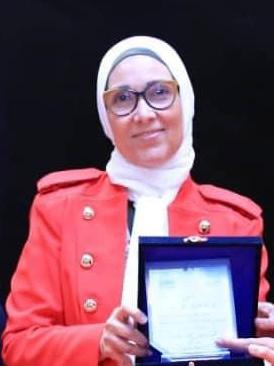
Message from the Head of the Department

The university also provides the faculty and the department with appropriate facilities, including modern classrooms and specialized labs. Currently, work is underway to complete cutting-edge audio-visual production studios, a newsroom, and fully-equipped editing labs. These facilities will give students hands-on experience across various modern media fields, allowing them to hone their skills in journalism, broadcasting, public relations, and advertising.

The department also has state-of-the-art facilities, including modern classrooms, audio and video production studios, and a fully equipped newsroom. These facilities allow students to gain hands-on experience in various fields of communication, such as journalism, broadcasting, public relations, and advertising.

 Moreover, the department has a strong network of alumni working in various fields of communication in all local and Arab media organizations. This network provides students with valuable opportunities for internships, mentorship and career guidance through workshops organized by the department, making it an excellent choice for students who are eager to communicate and train for a career in this dynamic field.

Ultimately, the Department of Mass Communication  at the Faculty of Arts, Helwan University, remains the top choice for many enthusiastic students who aspire to pursue a non-traditional career in an exciting and rapidly evolving field. It is the ideal destination for those seeking a comprehensive understanding of the new media landscape and an active role in shaping its future.
Image

Prof. Sahar Farouk
Head of Department

The university also provides the faculty and the department with appropriate facilities, including modern classrooms and specialized labs. Currently, work is underway to complete cutting-edge audio-visual production studios, a newsroom, and fully-equipped editing labs. These facilities will give students hands-on experience across various modern media fields, allowing them to hone their skills in journalism, broadcasting, public relations, and advertising.

The department also has state-of-the-art facilities, including modern classrooms, audio and video production studios, and a fully equipped newsroom. These facilities allow students to gain hands-on experience in various fields of communication, such as journalism, broadcasting, public relations, and advertising.

 Moreover, the department has a strong network of alumni working in various fields of communication in all local and Arab media organizations. This network provides students with valuable opportunities for internships, mentorship and career guidance through workshops organized by the department, making it an excellent choice for students who are eager to communicate and train for a career in this dynamic field.

Ultimately, the Department of Mass Communication  at the Faculty of Arts, Helwan University, remains the top choice for many enthusiastic students who aspire to pursue a non-traditional career in an exciting and rapidly evolving field. It is the ideal destination for those seeking a comprehensive understanding of the new media landscape and an active role in shaping its future.

And God is the Arbiter of Success,

The establishment of this department

The Faculty of Arts was established in 1995 and commenced its first academic year in 1996. The Department of Mass Communication was launched with two specializations: Journalism and Public Relations, and later, in 2010, the Radio and Television specialization was added. The four-year undergraduate program includes the first academic year as a general year, during which students study various interdisciplinary subjects alongside media courses, such as economics, political systems, geography, and psychology.

The second academic year includes media-related introductory courses, such as introductions to journalism, public relations, radio, and television, as well as communication theories and diverse strategies. The third academic year marks the beginning of specialization in the three tracks, where students study subjects specific to their chosen specialization. In the Journalism track, students study the history of journalism, magazine design, and digital journalism. In the Public Relations and Advertising track, they study marketing communication, crisis management, and website management. In the Radio and Television track, they study radio and television production, as well as broadcast performance.

Image
Image
Our Mission

Preparing distinguished media professionals capable of serving various fields of media work with scientific, professional, and technological competencies characterized by creativity, innovation, and modernity. This is grounded in ethical, human, and professional values, while also supporting the scientific research system through the development of scientific research areas and linking them to the latest advancements in science and mechanisms of sustainable community development.

Our Strategic Objectives

The strategic objectives of the Department of Mass Communication are outlined within the following framework: (Scientific Objectives, Educational Objectives, Administrative Objectives, Regulatory Objectives, Ethical Objectives, and Societal Objectives). These objectives include:

1

Educational Objectives:

Continuous assessment of educational effectiveness and institutional capacity, implementation of the latest academic programs, striving to meet standard student-to-faculty ratios, facilitating and encouraging the use of information technology, diversifying teaching and learning methods, developing practical and field training systems for students, linking the educational system with ethical and professional values in media work, honoring and supporting outstanding and distinguished students, and providing care and support for struggling students and those with special needs.
Image
2

The Scientific Objectives:

Developing general plans for scientific research policies, supporting scientific research, establishing a system for funding and publishing outstanding research by faculty members, assistants, and researchers, promoting engagement with scientific and technological advancements, expanding the use of modern technological tools, equipping the library with the latest scientific resources, supporting the digital library system and information systems, enhancing the educational effectiveness of postgraduate studies, and supporting research fields that address community needs and priorities.
3

The Administrative Objectives:

Expanding the implementation of institutional quality standards to achieve accreditation, enhancing the performance of administrative units within the Department of Mass Communication and supporting the automation of administrative tasks, responding promptly to address weaknesses in administrative aspects, optimizing the use of available resources, maximizing their benefits, setting priorities for their utilization, and working on their expansion, adhering to the implementation of the existing strategic plan and its executive mechanisms while taking the necessary measures to ensure its full execution, and documenting all activities and events while establishing comprehensive databases for them.
4

Regulatory Objectives:

Continuous development of systems, regulations, and governing mechanisms for all activities of the Mass Communication Department, monitoring and accountability by the Mass Communication Department Council for decisions and procedures in light of the strategic plan policies, ensuring transparency in practices, decisions, policies and plans, and establishing the principle of reward and punishment in all regulatory, administrative, student, and academic practices.
5

The Ethical Objectives:

Respecting public values and the ethics of the scientific community in all practices and activities, adhering to the professional ethics guide, rising above personal perspectives, and working within an administrative system based on defined mechanisms and rules for all departmental activities, while ensuring justice and equality among all groups involved in the academic process.
6

The Societal Objectives:

Expanding the scope of social responsibility duties undertaken by the Mass Communication Department toward society and its diverse groups. This includes participating in social events, contributing to solving societal problems and issues, linking field applications to sustainable community development issues, and activating cooperation and partnership protocols with diverse scientific, educational, and media institutions at both local and international levels.
Research Plan

To view the Research Plan of the Department of Mass Communication ,             click here.

Image
Image
Academic staff
جامعة حلوان

Helwan University strives to be a leading educational and research institution in technology and the arts, and excels in education and sciences according to international quality standards

Important Links
  • Visits 10012
جامعة حلوان